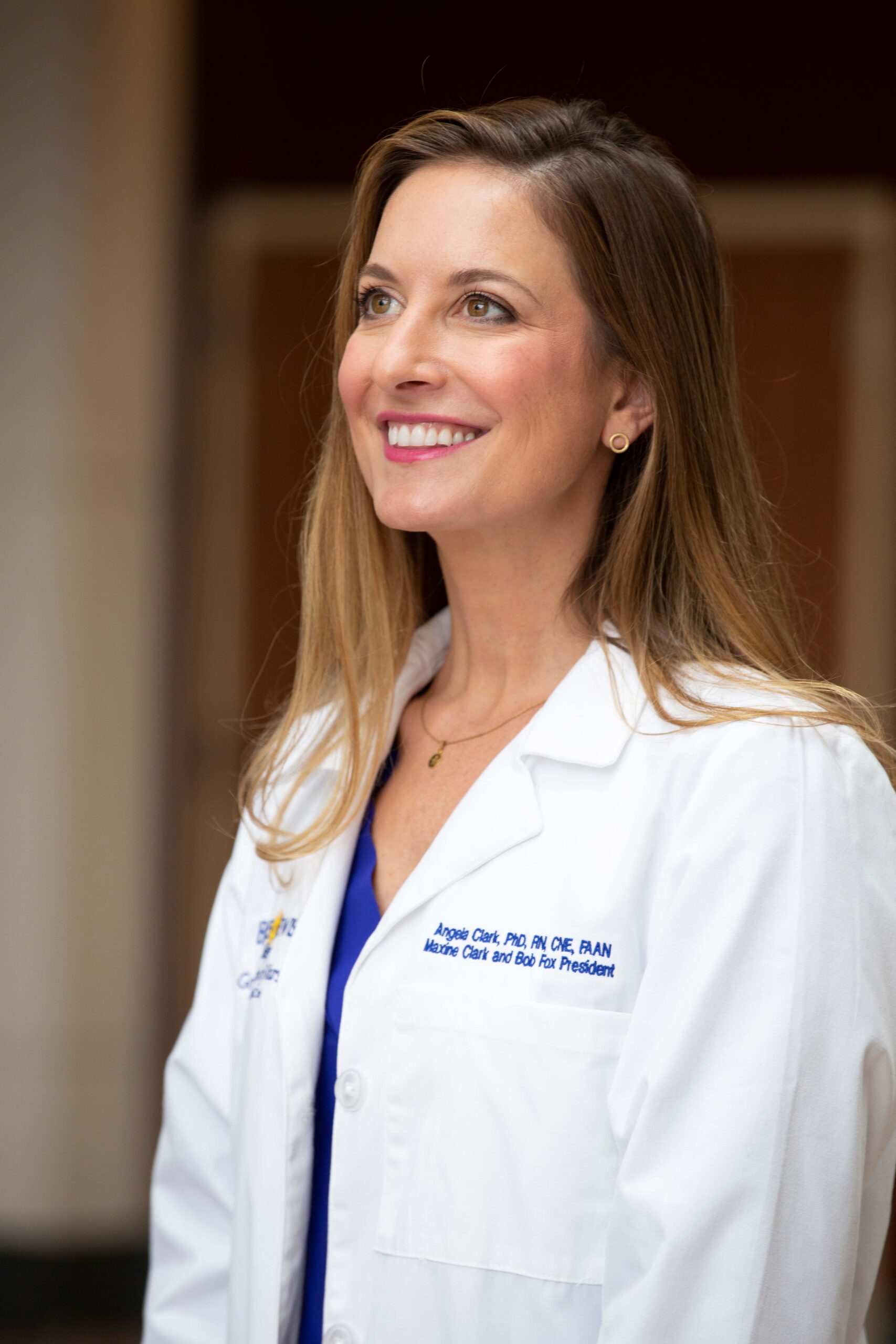
The Heart of Good Health: Angela Clark

In the world of nursing leadership, Angela Clark (’05, ’07) stands as a beacon of inspiration and change. 

Clark’s passion for nursing was ignited by personal experiences. When she cared for her grandmother during her senior year of high school, she witnessed the transformative power of around-the-clock care and realized the difference she could make. 

Later, an accident involving her brother compelled her to view nursing from the perspective of a patient’s loved one, reinforcing her dedication to the profession and emphasizing the pivotal role nurses play in driving positive outcomes.

Clark’s journey in nursing began at Idaho State University. 

“I did my first year of college at Idaho State to save money while completing prereqs,” said Clark. “In January I met with an academic counselor, and he mentioned that since I had a 4.0 I was eligible for scholarships at other schools. With his support, I applied to the University of Tennessee.”

That August, Clark arrived in Knoxville for the first time with two suitcases. 

“My roommate gave me a warm Tennessee welcome,” said Clark. “She walked me all over campus while teaching me ‘Rocky Top’ and other football chants, introduced me to sorority life, and made sure that I wore the right shade of orange for my first football game.”

Five weeks into Clark’s time at UT, she watched in horror as the atrocities of 9/11 unfolded. 

“I felt so far from home, but I also had everything I needed,” said Clark. “I was safe and supported. I learned a lot about myself in my first year at Tennessee. As hard as it was to move away from the familiarness of Idaho, the reward was so great.”

Clark went on to complete her BSN and MSN at UT, graduating summa cum laude and receiving the Dean’s Award. She credits her experience of coming to a new place without knowing anyone as the reason she has been able to relocate throughout the years. She has spent time in North Carolina, Cincinnati, Singapore, and now St. Louis. 

“My time at UT also helped shape my perspective on health, wellness, and gratitude,” Clark said. “We have so many resources in this country, but our outcomes are not always the best. There is a lot of opportunity in health care, and nursing is uniquely situation to lead these changes. I have more motivation than ever to drive our impact.”

After completing her master’s degree, Clark was invited to become an instructor in the College of Nuring’s community health program. This opportunity marked the beginning of her journey into academia. 

During Clark’s time at UT, Tami Wyatt—formerly a nurse educator and now the associate dean of research—encouraged her to pursue a PhD. 

Clark explored new horizons, eventually obtaining a PhD and taking on leadership positions at institutions such as the University of Cincinnati College of Nursing. In May 2022, she was appointed the Maxine Clark and Bob Fox President of Barnes–Jewish College School of Nursing. 

Clark’s research focuses on development of multiple educational interventions to support harm reduction efforts related to the opioid epidemic, reduce stigma against people with substance use disorders, and increase knowledge and implementation of evidence-based best practices for substance abuse treatment.

When Clark is feeling tired or overwhelmed, she thinks back to an experience she had at a Narcan distribution program for opioid overdose prevention. 

“I conducted a training at an inpatient addiction treatment center,” said Clark. “After the training, a young man came up to me with tears in his eyes and thanked me for caring. While wiping away his tears, he said, ‘If only I’d had this information last week, I would’ve been able save my twin brother.’”

The encounter reinforced Clark’s determination to innovate using technology to disseminate lifesaving information more efficiently, ensuring that lack of education is never an excuse for lives lost.

“I have to work faster, harder—there has to be a better way,” said Clark. “Our ability to advance access to care and health equity keeps me going. I am also inspired to invest in and sponsor the next generation of the nursing workforce.”

Clark is a Fellow of the American Academy of Nursing. She was named the 2020 Ohio Nurse of the Year by the March of Dimes and has completed externships at the National Institutes of Health and the American Association of Colleges of Nursing. She is a member of the inaugural class of Coldiron Fellows at Case Western Reserve University, a national and international group of senior nurse executives and senior leaders in academia including deans, associate deans, executive directors, certified nurse educators, and chief nursing officers.

“If you want to see impact, invest in nursing,” said Clark. “Our nursing lens and the ability to form partnerships and become integrated in our communities will transform our nation’s health outcomes.”

CONTACT:

Kara Clark (865-974 9498, [email protected])

Expanding Horizons 

The College of Nursing has established itself as a global leader in advancing health care and nursing education. With a vision of improving health outcomes worldwide, the college has embarked on numerous initiatives that have made a significant impact.

International opportunities hold immense potential for students and faculty alike. They provide a gateway to acquiring a global perspective, delving into cutting-edge nursing research, and rendering hands-on care to diverse populations across the world. The College of Nursing, committed to nurturing global health care leaders, offers an array of enriching programs in destinations such as Panama, Kenya, Peru, and Belize. 

Associate Dean of Practice and Global Affairs Nan Gaylord says, “Nurses play a vital role in positively impacting health outcomes of communities. The opportunity to study abroad gives student nurses and faculty members the chance to witness firsthand how health care systems operate on a global scale. It not only expands horizons but also fosters collaborative partnerships to enhance patient experiences and deliver education to nursing professionals worldwide. It is an empowering experience while at the same time developing empathy for people not able to access the same care that we expect in the United States.”

Not Just Vitamins 

Carrie Bailey, a dedicated clinical associate professor, understands the immense value of international experiences in shaping competent nurses. Bailey has made numerous journeys to Belize leading undergraduate nursing students. At Unitedville, a tight-knit agriculturally rich village in the Cayo district, Bailey and her team embark on missions that encompass home visits, medical clinics, and compassionate care provision. 

“During home visits, we collaborate closely with community health nurses specially trained to conduct health assessments, ensuring that no one is overlooked in terms of medical attention,” Bailey explains. Appointment cards for upcoming clinics are distributed during the visits, enabling effective organization and preparation for the clinic days.

Armed with insights from these home visits, students and faculty unite their expertise to establish health clinics that cater to the specific needs of the community. Whether it’s conducting blood pressure checks, monitoring blood sugar levels, or addressing pressing health concerns, students and faculty collaborate to deliver impactful interventions. 

Bailey recalls an encounter that unfolded during one clinic. An elderly woman from a remote Mayan village traveled for hours to Unitedville to visit the clinic. She initially presented with a persistent cough, and her condition seemed ordinary at first glance. As a student nurse delved into her medical history, however, a series of alarming symptoms unfolded—unexplained weight loss, bloody sputum, and debilitating night sweats. The health care team diagnosed the woman with tuberculosis—an uncommon ailment in Belize, with only five documented cases in 2022. Thanks to the students’ unwavering commitment and expertise, the patient’s affliction was identified, and she was referred to a local clinic for comprehensive treatment.

Bailey emotionally reflects, “In the absence of any other tales to share, witnessing the transformation of this one patient made the entire trip worthwhile. She journeyed for over six hours, determined to seek solace in a makeshift clinic staffed by volunteers. Our mission extends far beyond the mere distribution of vitamins; we are unequivocally making a tangible impact on the lives of patients worldwide. It is this profound purpose that compels me to return time and again.”

The Impact of Water

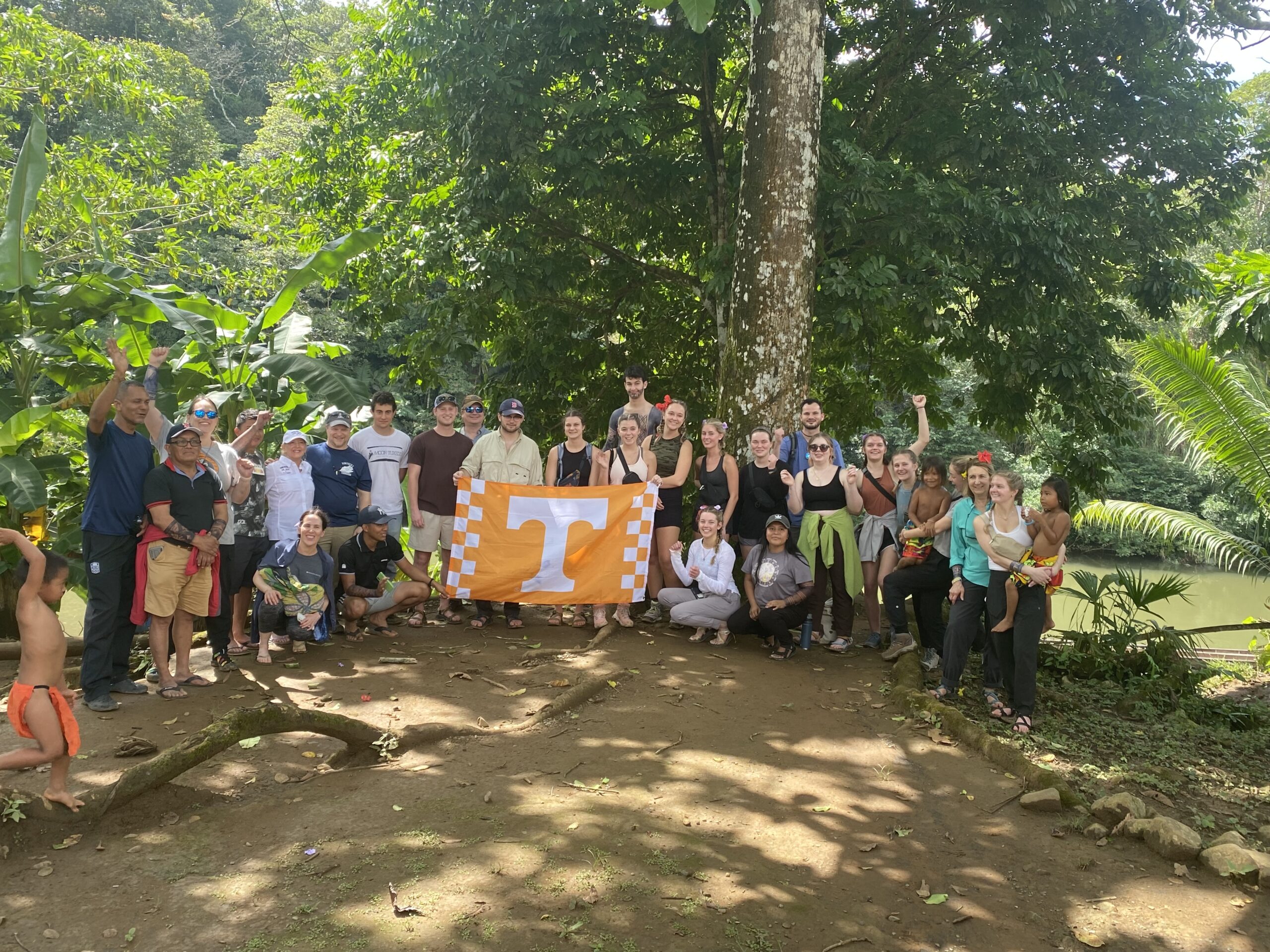
In January, UT’s One Health initiative facilitated an interdisciplinary engagement opportunity for students to address global public health issues, with a focus on water and sanitation. 

“The impact of water on health, its transport, and storage were all evaluated by nursing students,” says Gaylord. “A water testing project revealed to students that water storage in any container increases contamination.”

Nursing student Hailey Benner found many aspects of the trip inspirational, but learning about medicine in the indigenous village really interested her. 

“Learning about medicine in Panama was very impactful to me. The people in the village taught us how they use what’s around them in the rain forest as medicine,” she says. “I thought that was interesting because there are so many herbal remedies that they use where we just throw pills or other medicines at patients. It will be something that I take back and think about when I am practicing and see what other options are available for people that are sick.”

Worldwide Partnerships

The College of Nursing has forged long-term partnerships with nursing schools and health care institutions worldwide. These collaborations focus on faculty and student exchanges, joint research projects, and curriculum development. Through the partnerships, the college has facilitated the transfer of knowledge, skills, and best practices, nurturing a global community of nurses committed to delivering quality care.

One example of this collaborative work is a program with a nursing school in Kenya. Through regular video conferences, faculty members share teaching strategies, discuss case studies, and engage in research partnerships. The exchanges have enriched the educational experience for students and resulted in innovative approaches to health care delivery in both countries.

“All of the hard work came to fruition in July when we sent the first group of nursing students to Kenya,” says Gaylord. “Students worked alongside the WAKA School of Nursing students in the local public hospital to provide care. They also assisted in a health fair in a rural health clinic in Ndathi.”

Recognizing the power of technology in bridging geographical boundaries, the college has embraced electronic learning platforms to deliver specialized courses to international students. Nurses from around the world can now access high-quality education and training modules, empowering them to make a difference in their communities.

“The impact of the college’s global efforts reverberates across borders, touching the lives of countless individuals,” says Dean Victoria Niederhauser. “By nurturing global partnerships, promoting cultural understanding, and leveraging technology, the college continues to expand its reach and transform health care outcomes on a global scale. We are paving the way for a healthier and more equitable world where nursing plays a central role in building resilient health care systems.”

Looking into the Future

“Through comprehensive education and hands-on experiences, nursing students are equipped with the knowledge and understanding of the social determinants of health, particularly in low-resourced countries,” says Gaylord.

The impact of these determinants on the well-being of individuals becomes evident, emphasizing the importance of economic stability, a predictable environment, infrastructure, access to education, and health care. 

By immersing themselves in communities with limited resources, nurses gain firsthand experience on the significance of factors such as water, air, shelter, energy, and health care services. 

“Our nurses play a crucial role in filling gaps in care within these communities, striving to improve their overall health and leaving a lasting positive impact,” says Gaylord. “The overarching goals of our international programs encompass education, clinical care, and fostering a deep sense of compassion and dedication in the hearts of our nursing students, reflecting the spirit of a Vol nurse.”

CONTACT:

Kara Clark (865-974 9498, [email protected])
College of Nursing Awarded $1.47 Million Grant to Enhance Opportunities for Nurses in Delta Region

The University of Tennessee, Knoxville, College of Nursing was recently awarded a grant of $1.47 million from the U.S. Department of Labor’s Employment and Training Administration. The grant is specifically designated for the Workforce Opportunities for Rural Communities (WORC) initiative.

Executive Director of Academic Advising and Enrollment Management and Assistant Professor of Practice Jada Russell will lead the team, which also includes Kimberly Brown, clinical assistant professor, Phillip Moore, assistant dean of undergraduate programs and Clea McNeely, research professor. This grant aims to increase employment prospects for registered nurses in the Delta region of Tennessee.

Titled “Bridging to Opportunity: Good Jobs for Nurses in the Delta Region,” the project will pave the way for a career pathway, contributing to the economic advancement and long-term resilience of registered nurses in the Delta region. Current RN’s in the region will have the opportunity to apply for the online RN to BSN program. If accepted into the program the grant will cover tuition. The primary focus of the project is to foster economic stability and improve the health sector within the region.

“We are dedicated to creating a sustainable, equitable, and supportive environment for nurse trainees to thrive and progress within their careers,” said Russell. “This project isn’t just about jobs; it’s about empowering individuals and building a resilient healthcare workforce.”

Bridging to Opportunity combines the resources from the College of Nursing, Dyersburg State Community College, Southwest Tennessee Community College, Baptist Memorial Hospital, United Way, Rural Health Association and American Job Center to overcome barriers that impede associate-degree nurses from developing their skills to access career advancement.

The anticipated outcomes include the enrollment of 32 trainees in the RN to BSN online program, training for nurse mentors and College of Nursing faculty members in equity-based mentoring and advising, and the establishment of workplace mentoring programs. This initiative will benefit both new nurses entering the to the workforce and incumbent workers in the nursing field.

The project will cover numerous counties in the Delta region, including Benton, Carroll, Chester, Crockett, Decatur, Dyer, Fayette, Gibson, Hardin, Haywood, Hardeman, Henderson, Henry, Lake, Lauderdale, Madison, McNairy, Obion, Tipton, and Weakley.

CONTACT:

Kara Clark (865-974 9498, [email protected])
Nursing the Nurse: Teaching Students to Take Charge of Their Own Well-Being

In one of her nursing classes, recent graduate Rebecca Fawver made a lanyard clip to serve as a visual reminder that caring for herself is key to caring for her patients.

Her clip includes a photo of her with her fiancé; a reminder to use breathing exercises―Inhale 1-2-3-4, hold it 1-2-3-4, exhale 1-2-3-4―to de-stress; and one of her favorite quotes, from The Help: “You is smart. You is kind. You is important.”

Making lanyard clips is just one way faculty in the College of Nursing help their students craft coping strategies for a career that is physically, mentally, and emotionally demanding.

“Nurses just give, give, give,” said Dean Victoria Niederhauser. “But it’s like they tell you in an airplane—if you don’t put your oxygen mask on first, you’re going to run out of steam.

“We need to teach this generation of nursing students how to take care of themselves so they can have a long, wonderful career as a nurse, taking care of others.”

Condition: Critical

Because of the rigors of the job, “nurses tend to have a lot of guilt about taking care of themselves,” said Allyson Neal, clinical associate professor and assistant dean of graduate programs, who is a trained psychiatric mental health nurse practitioner. 

They give up their day off to fill a shift. They feel guilty about taking breaks, even bathroom breaks. They skip lunch to see patients. 

At the same time, she said, health care is more challenging than ever.

People are living longer than in the past, and many struggle with chronic illnesses. Environmental issues like poor air quality exacerbate ailments. Poverty continues to force some patients to choose between buying food or medicine. And workplace violence is a growing threat to health care professionals.

And then there was―is―COVID-19.

“The pandemic really stretched health care to the brink,” Neal said. 

Citing a 2022 survey of more than 53,500 RNs and LPNs across 45 states, the Journal of Nursing Regulation reported that 50.8 percent of nurse respondents felt emotionally drained, 56.4 percent felt used up, 49.7 percent felt fatigued, 45.1 percent felt burned out, and 29.4 percent felt at the end of their rope a few times a week or every day. The issues were most pronounced among nurses with 10 years of experience or less. 

Experts agree that the already-critical nursing shortage is in danger of getting even worse.

The college is trying to close the gap by increasing its enrollment―this fall could see the largest-ever entering class, with about 300 new BSN students. But even the first steps of a nursing career are challenging. “Nursing school is, in itself, pretty traumatic,” said Shelia Swift, executive associate dean of academic affairs. “It’s hard. It’s a lot of hours in clinicals and studying.”

So how does the College of Nursing, which receives about 4,000 applications each year, choose a diverse set of students who are likely to succeed as nurses?

“Traditionally our college has relied heavily on academic metrics for admission,” said Jada Russell, the college’s executive director of academic advising and enrollment management. “Now we’re exploring a more holistic approach.”

Russell said faculty say students with leadership skills and self-confidence who have set long-term goals for themselves and who value community involvement seem to thrive in nursing school―and in nursing.

Treatment Plan

“Our students are highly capable, highly motivated,” Russell said. “However, this may be the first time they’ve been academically challenged or even emotionally challenged.”

First-year nursing students are encouraged to take a First-Year Studies class designed just for them. It provides information about campus resources like the Student Success Center and the Student Counseling Center and lets students get to know college administrators.

De-stressing techniques are part of the curriculum.

“We incorporate small little things that they can use over and over,” Neal said. “Our goal is for them to start building these things into their daily living.”

For instance, many nursing faculty lead students in moments of mindfulness before difficult exercises or exams. Classes touch repeatedly on healthy behavior, including good nutrition and getting enough sleep, and offer tips for taming escalating emotions. Earlier this year, college faculty, staff, and students gathered for yoga on the Ayres Hall lawn. 

Faculty and staff also keep their eyes open for signs of crisis. 

Russell’s office has created a student alert form that faculty can use to report concerns about a student’s academic performance, attendance, or general well-being.

When a report is filed, the student is invited to meet with their academic advisor. They are reminded about campus resources, and staff members offer to accompany them to the Student Counseling Center to receive immediate assistance if needed. 

Niederhauser said nursing faculty are also urged to be role models, showing students how hobbies and a healthy work–life balance can keep stress at bay.

Faculty have gathered to decorate Valentine’s Day cookies and paint flowerpots. They’ve started a pickleball group, and they’ve enjoyed trivia night at a local pizzeria. Niederhauser holds periodic Walk with the Dean events in nice weather.

Well Taught

Fawver, now a labor and delivery nurse at Fort Sanders Medical Center in Knoxville, said the college’s emphasis on self-care helped her move from the classroom to the real world with greater confidence.

And when she starts feeling overwhelmed, she refers to the advice on her lanyard clip.

Inhale 1-2-3-4, hold it 1-2-3-4, exhale 1-2-3-4.

“I know that going into practice is very different than being in school,” Fawver said. “But the experiences I had in nursing school really prepared me.”

2023 Pharmacology Update

The University of Tennessee, College of Nursing’s annual Pharmacology Update will be on Friday, November 3. The event will begin at 9:00 a.m. and conclude at 2:30 p.m.

Guest speakers for the event are James Wheeler, associate dean and associate professor of clinical pharmacy and translation science from the University of Tennessee, Health Science Center and Jeremy Mills, coordinator of the psychiatric mental health nurse practitioner program at the College of Nursing.

Registration will be open until November 1. The cost to attend is $110 and the student rate with a valid student ID is $65. Please visit tiny.utk.edu/Pharm_Update23 to register.

The University of Tennessee Medical Center is accredited as a provider of nursing continuing professional development by the American Nurses Credentialing Center’s Commission on Accreditation. This event qualifies for
5.0 contact hours.

Upon completion of evaluation, all participants will receive a statement of attendance and certificate of nursing professional development hours. The online-live webinar will be recorded and available for NCPD for 6 months after the event . Two (2.0) hours of the 5.0 hours will be on the on the treatment and management of patients with opioid or other substance use disorders.

Questions? Call 865-974-7190.

CONTACT:

Kara Clark (865-974 9498, [email protected])
The Heart of a Vol Nurse: Learning to Care for People, Families, Communities

“When I grow up, I’ll be a nurse to help you when you’re sick. I’ll do the nicest things for you to make you better quick.”

Shelia Swift, executive associate dean of academic affairs, recited that rhyme at career day when she was in kindergarten.

In the years since, she’s learned that being a nurse―and training the next generation of nurses―is not that poetically simple.

Nurses need knowledge. Skills perfected through practice. Real-world experience.

But beyond that, explains Dean Victoria Niederhauser, being a good nurse also requires a host of qualities that are difficult to teach in any traditional way.

“Nurses care for people in their worst moments. Small gestures, like reassuring words giving permission to feel afraid, frustrated, angry, mad, and sad, or therapeutic touch, like holding a hand, can ease the emotional turmoil of a difficult situation. We strive to teach our students the importance of proving safe and effective nursing care with empathy and compassion.” 

Caring for people

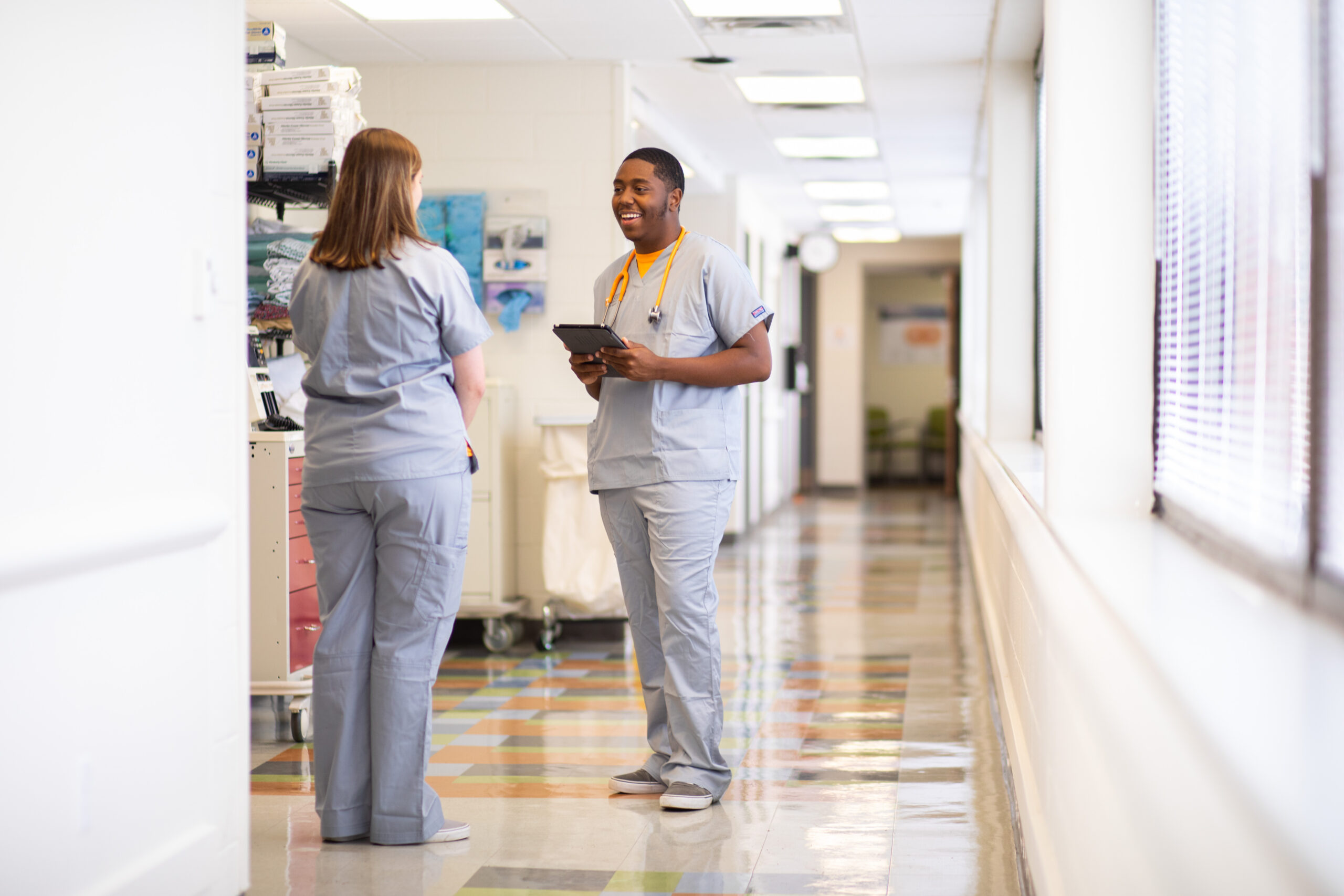
From the time they begin nursing classes in their junior year, UT nursing students spend a lot of time honing both their skills and empathic approach to caring. In the college’s various learning labs they encounter strategically devised scenarios that involve low-fidelity manikins (noncomputerized or capable of limited actions), high-fidelity manikins (computerized to mimic physiological responses), and standardized patients (actors working from scripts).

The newest lab, for the UT Medical Center Nursing Scholars, a new cohort of the traditional BSN program, will open this fall in the Innovation North facility at Cherokee Farms. Made possible through the collaborative partnership between UT and UTMC, the lab will house a 12-bed psychomotor skills lab and a four-bed high-fidelity lab that will look and feel like a hospital floor. The high-fidelity lab is where students and UTMC staff will practice routine and advanced medical–surgical care and support specialty skills from mother–baby care to critical care.

Susan Hébert, assistant dean of simulation, said the labs provide opportunities for nursing students to work through situations they may never encounter during their clinicals—such as a cardiac patient going into distress, a postpartum patient who begins to hemorrhage, or a patient having a schizophrenic episode. Students also experience interacting with people of diverse cultural backgrounds, sexual orientations, and temperaments.

Simulated practice helps students hone their medical skills. It also provides opportunities to practice interpersonal skills as they encounter challenging “patients” and their families and interact with other health care providers.

“We are committed to providing realistic and intentional learning experiences. In doing so, we provide students unique opportunities to challenge their critical thinking and ability to practice safely and communicate with empathy,” Hébert said.

Students’ sessions in the simulation labs are often video recorded so they can watch themselves at work, reflect on their performances, and think about what they’d do differently next time. Hébert said the simulation labs provide safe places where students can make mistakes and get second chances as they learn to think, talk, and interact like nurses.

UT’s simulation program is more extensive than those at many colleges and universities, and it is accredited by the Society for Simulation in Healthcare.

Hébert said the simulation spaces are also used by researchers to develop tools and applications that could revolutionize health care and health care education in the future.

Caring for the Community

Each semester during their junior and senior years, nursing students engage in at least 30 hours of academic service–learning at a community agency.

The college has 45 to 50 community partners, ranging from after-school programs to agencies that serve the poor and homeless to facilities that care for older adults. Students stay with their partner agencies for the duration, allowing them to build relationships.

“It’s a win-win-win,” Swift said. “Students are exposed to something that will enrich their professional nursing. It’s a win for the community partner because they have consistent help. And the clients benefit too.”

Swift said academic service-learning activities aren’t necessarily health related. And that’s OK, because students are learning soft skills like face-to-face verbal communication, time management, and problem-solving. By writing reflections about their service–learning, they also practice their written communication skills.

Students work in college programs like Vine School Health Center in Knoxville’s Vine Middle School, which provides health care to underserved children throughout Knox County, and the Precious Prints Project, which has provided more than 2,000 sterling silver fingerprint pendants to parents who have lost a child.

As associate dean of practice and global affairs, Professor Nan Gaylord oversees the Center for Nursing Practice, which encompasses both programs.

Gaylord helped found the Vine School Health Center in 1995. Now funded by federal grants and self-sustaining, the clinic logged more than 7,000 visits last year and saw students from every school in Knox County. College of Nursing faculty and two licensed clinical social workers staff the clinic. Undergraduates interested in pediatric nursing rotate through the clinic, working alongside the nursing staff.

The Precious Prints Program, a service project of the Student Nurses’ Association, is now operational in all Knoxville hospitals and in hospitals in several surrounding communities. There is an outreach effort to West Tennessee, and the program is being used as a model for a similar program in Las Vegas.

Gaylord said student nurses train hospital nurses in using Precious Prints kits and organize the annual Sprint for the Prints 5K, all of which helps student nurses gain empathy, bolster organizational skills, hone professionalism, and demonstrate leadership. Working with people in the community also helps them learn to prioritize, take responsibility, and recognize when they need to change tactics, raise a red flag, or ask for help.

“It teaches our students the characteristics we want them to develop as nurses,” she said.

Gaylord said caring for the underserved, whether it’s in the Knoxville area or halfway around the globe, also shows students that health care isn’t just care provided in the hospital.

“It’s fresh air, clean water, and access to health and prevention services, which make a difference in the health and well-being of our communities,” she said. “What we need to do as nurses is to provide care to our communities from a public health perspective.”

Caring for the World

During spring break 2023, recent graduate Margeaux Maerz traveled to Belize with a group of UT nursing students to do outreach and run health clinics with local providers.

“The Belize trip provided my first experience triaging and managing cases on a rolling basis,” Maerz said. “It was also a great opportunity to practice and hone my physical assessment skills. Learning to ask the right questions and the right follow-up questions to understand what the patient needed help with was crucial.”

The Belize trip is one of a growing number of international trips organized by the college to help students gain new perspectives on what it means to care for people around the globe.

Maerz attended UT as part of the Health Resources and Services Administration Nurse Corps Scholarship Program. Now that she’s graduated, she must work for two years at a hospital facing a critical staffing shortage. She’s currently serving as a nurse in the intensive care unit at Providence Alaska Medical Center in Anchorage, Alaska.

In another international experience, a group of nursing students went to Panama in January on a fact-finding mission funded by a grant from UT’s One Health Initiative―which seeks to improve local and global health by bringing together experts from various fields to find practical solutions to issues like food insecurity, loss of biodiversity, environmental contaminants, and substance abuse.

At the end of July, five students will travel to Nyeri, Kenya, where they will partner with WAKA Medical Training Institute and Hospital.

“They’ll be paired with one of their students and provide nursing care in the hospital with those other students for five days,” Gaylord said. “They’re going to be exposed to lots of things they haven’t been exposed to before.”

In August, three students will take an inaugural trip to Peru to work with a local agency that serves mountain people and teaches area women to provide minor health care when other medical care is unavailable. The students also will visit with a local traditional healer to learn health care customs.

Through international experiences, students learn how rudimentary health care can be in other places. They learn to slow down, have patience, communicate empathetically, and be creative and open-minded.

“They see that America doesn’t always have all the right answers to health care,” Gaylord said. “We have many, many resources that other countries don’t have, but Western medicine is only one way to take care of things.”

She said students also learn that health care often happens outside traditional hospitals and clinics.

For Maerz, who is just beginning her career, traveling to Belize showed her that nursing is both a science and an art: good nurses must possess traits well beyond their medical skills to care completely for their patients.

“This trip allowed me to appreciate the barriers to health that some populations face, and I realized that those barriers are not unique to Belize,” Maerz said. “Coming back to my clinical placement in the medical critical care unit at UTMC, I saw many of the same ailments and barriers to care—rural living, lack of transportation, mistrust of health care systems, poverty, and lack of health literacy, to name a few.”

CONTACT:

Kara Clark (865-974 9498, [email protected])
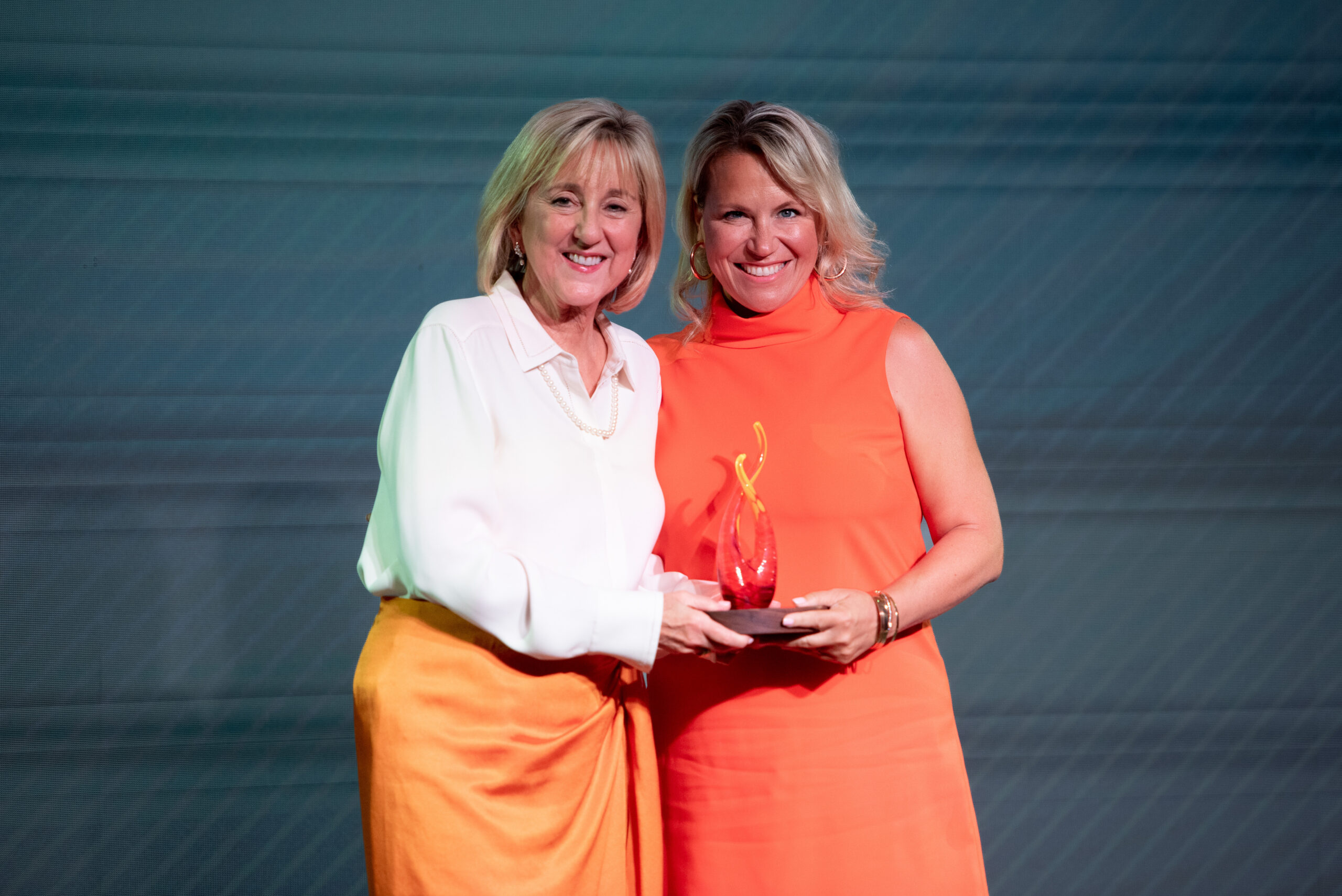
Becker (’98) Honored with 2023 Alumni Service Award

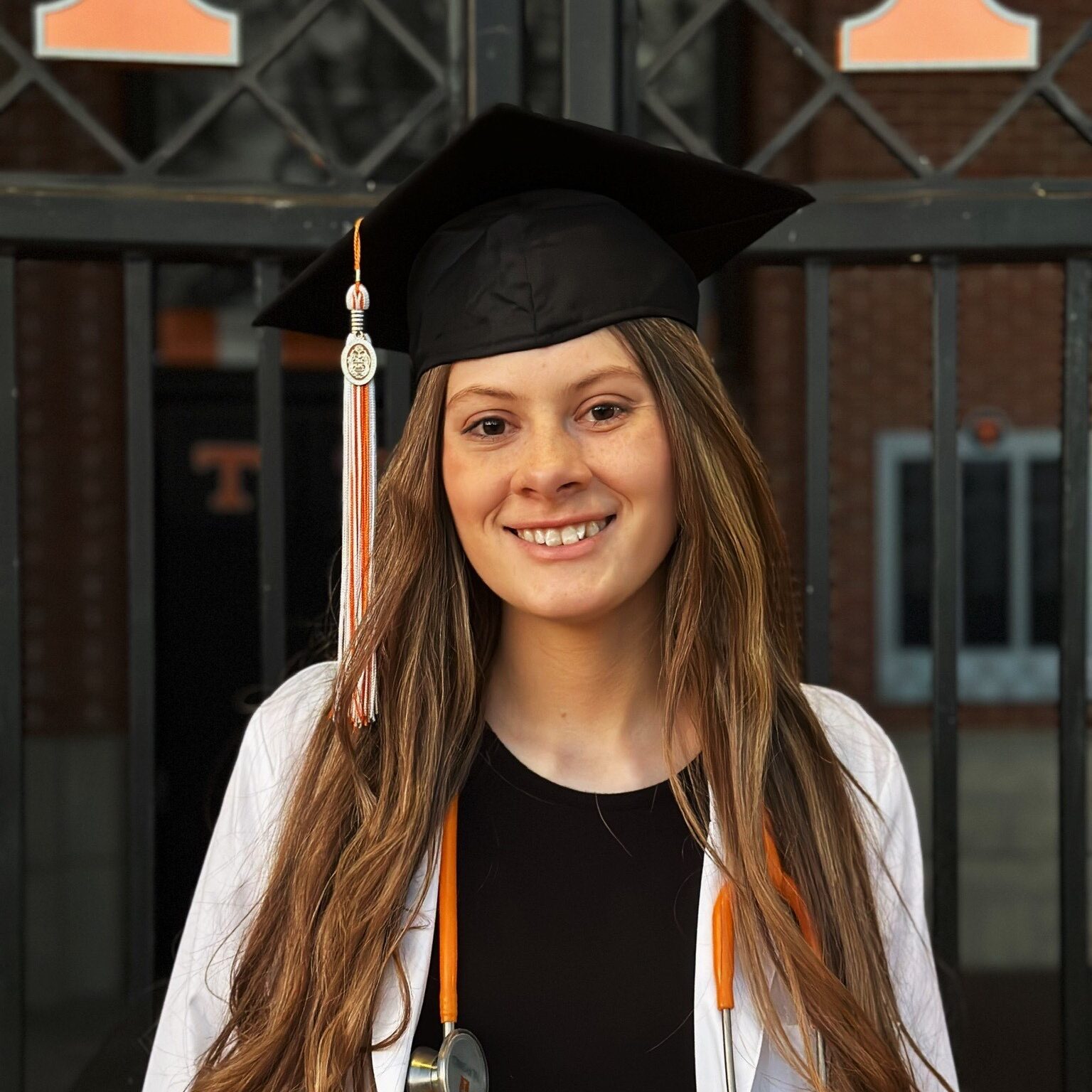
Stacey Youree Becker (‘98) was recently honored as a recipient of the prestigious 2023 Alumni Service Award. This distinguished honor recognizes exceptional service and unwavering commitment to the university, exemplified by Becker’s dedication and leadership over the years.

Becker’s journey at the University of Tennessee began when she earned her Bachelor of Science in Nursing (BSN) degree from the College of Nursing in 1998. During her time as a student, Stacey distinguished herself not only in academics but also in extracurricular activities. She was an active member of the Student Government Association, Student Nurses’ Association, Delta Delta Delta sorority, and Student Alumni Associates, reflecting her commitment to both her education and her campus community.

Stacey’s exceptional dedication to her nursing studies did not go unnoticed. In 1997, she received the esteemed Fuld Fellowship, a recognition awarded to outstanding pre-licensure nurses. In 1998, she graduated with Cum Laude honors distinction. Becker’s membership in the Sigma Theta Tau Nursing Society, an international professional society recognizing future nursing leaders, served as a testament to her potential and her bright future in the field of healthcare.

Beyond her academic achievements, Becker’s commitment to the University of Tennessee continued to shine brightly as an alumna. Her active involvement included serving as a member of the UT Knoxville Alumni Board of Directors, participating as an ambassador at student impact events, contributing her expertise as a UT Women’s Council Board member, and fulfilling her role as a UTAA Board Member.

Becker currently serves as a member of the College of Nursing Advisory Board, where her insights and experiences are invaluable. She also holds the position of co-chair of the College of Nursing Alumni Committee, where she plays a vital role in shaping the alumni experience. Her commitment extends to the UT Alumni Legislative Council, where she actively engages in initiatives that benefit the entire UT community.

Becker was recently honored as one of the College of Nursing’s Fiftieth Alumni Award Winners.  This recognition was part of the college’s 50th Anniversary Gala, that celebrated 50 outstanding alumni who have made a significant impact on the field of nursing.

Becker and her husband, Jerry, who is a 1997 graduate of the Tickle College of Engineering, share a deep-rooted connection to the university. Their two sons, William and John, are also part of the Volunteer family. William is a sophomore at the Haslam College of Business, and the Beckers hope to see John follow in his brother’s footsteps after graduating high school.

“Stacey’s unwavering commitment to the University of Tennessee is a shining example of the impact that dedicated alumni can have on their alma mater,” said Victoria Niederhauser, dean of the college of nursing. “Her journey, from an outstanding student to a dedicated alumna, reflects the true spirit of our university. Stacey’s leadership, involvement, and contributions have left an indelible mark on our community, and her recognition with the 2023 Alumni Service Award is a well-deserved tribute to her exceptional dedication and service. We are immensely proud to have Stacey as part of our Vol Nurse family, and she continues to inspire us all with her passion for our university and the field of health care.”

CONTACT:

Kara Clark (865-974 9498, [email protected])

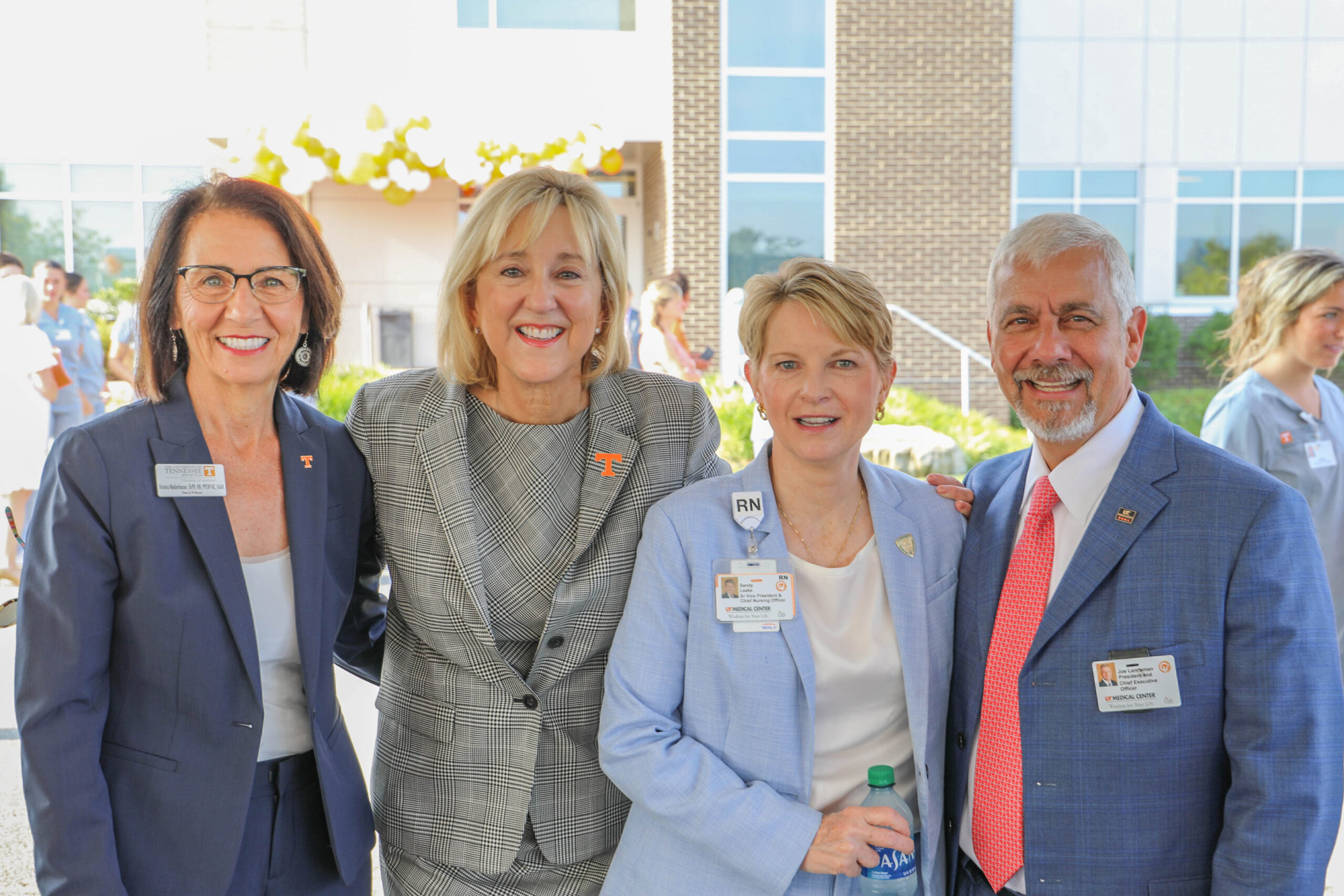
College of Nursing and UTMC Hold Ribbon-cutting Ceremony to Celebrate BSN Scholars Facility

The University of Tennessee Medical Center and University of Tennessee, Knoxville, College of Nursing celebrated the opening of the BSN Scholars Facility with a special ribbon-cutting ceremony on Friday, Aug. 25.

The new state-of-the-art simulation and learning lab were funded by the medical center for the BSN Scholars partnership, a groundbreaking academic-practice partnership that provides nursing students with an unparalleled opportunity to learn at a respected academic medical center. The newly established satellite location at UT Research Park symbolizes the commitment of both institutions to advancing nursing education, preparing future nursing professionals for the challenges of the field, and meeting regional workforce needs.

“This innovative program will allow more students to pursue the health care career they want—changing not only their lives but the lives of patients they care for and the communities they serve,” said Chancellor Donde Plowman, “It’s a testament to what’s possible when you have a partner like UTMC that shares our vision and mission of making life and lives better for Tennesseans.”

Victoria Niederhauser, College of Nursing dean, spoke at the event, telling the crowd how the partnership was formed.

“We knew that the old tactics were not going to solve today’s nursing workforce issue, so together we built a new approach to increase the recruitment pool — the BSN Nurse Scholars Program,” she said. “This program not only accelerates academic learning but also bridges the transition from classroom education to the clinical setting. I commend the commitment of UTMC for providing financial support and enabling nursing students to gain valuable experience at the very institution they will eventually serve.”

Also speaking at the ceremony were Joe Landsman, CEO of UTMC and Sandy Leake, senior vice president and chief nursing officer at UTMC.

As attendees looked on, representatives of both institutions came together for the ribbon cutting that symbolically inaugurated the new facility. The gesture underscored the unity of purpose driving the endeavor and marked the beginning of an exciting new chapter in nursing education.

Following the ceremony, attendees were invited into the facility for tours and refreshments.

CONTACT:

Kara Clark (865-974 9498, [email protected])
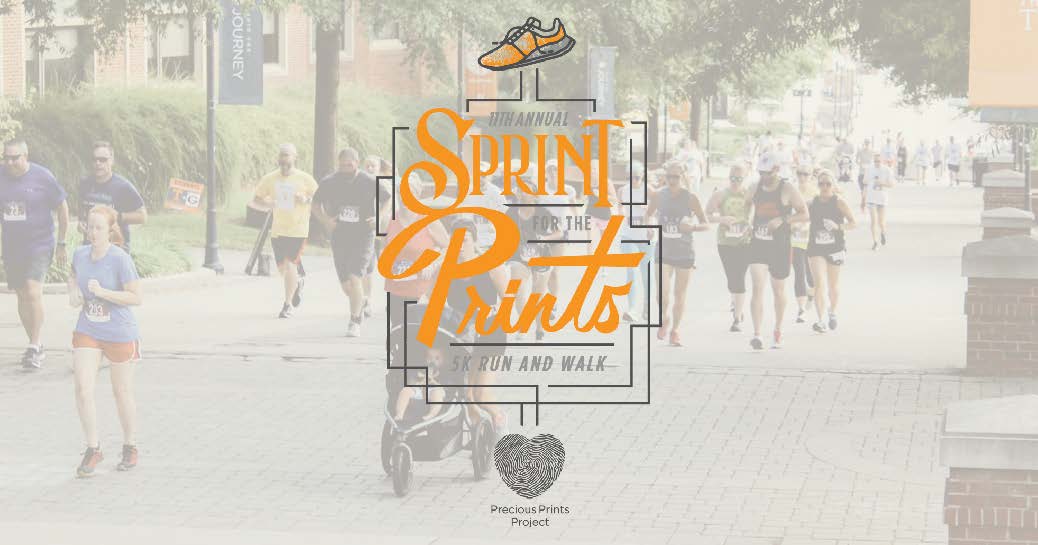
Knoxville Runners: College of Nursing’s Precious Prints 5k will be held October 28 through November 4

For the eleventh year in a row, UT’s Student Nurses Association will host its annual Sprint for the Prints 5K Run and Walk.

This event will support the Precious Prints Project, which provides free fingerprint charms to families who are grieving the loss of a child. The project aims at helping families channel their grief in a healthy, compassionate way.

This year’s run will once again be held virtually. The virtual format allows participants to complete the 3.1 miles at any time from October 28 through November 4.

There will also be an in-person Kick-off Celebration on October 28 at UT Gardens. The celebration will feature fun family activities, maps of sample courses, and t-shirt pickup. There will also be a time of remembering children through a fingerprint board, time of reflection, and an official start for those who choose to participate on their own.

UT nursing students manage the project in its entirety. They collect funds year-round to buy materials to produce the charms, and train nurses in area hospitals on obtaining fingerprints and caring for the families during their devastating loss.

“As nursing students, we have a passion to help heal others,” said Sophia Vlattas, senior nursing student. “Being a part of the Precious Prints Project gives us this opportunity as we help grieving families in the most difficult of times. Through fundraising events like the Sprint for the Prints, we can provide silver pendants with a child’s fingerprint completely free of charge to families who have lost a child in the hospital. Seeing the community of strong mothers and families these prints have built is why we truly love this project. We are honored to be able to plan events like the Sprint for the Prints to continue to raise money and help serve as many families as we can.” 

Since January 2011, more than 2000 families have received a pendant.

“The effort and dedication that have gone into organizing this event is truly commendable,” said Lynne Miller, program director. “This annual event is a manifestation of unity, compassion, and the unwavering support we provide to families through the Precious Prints Project. I am truly honored to be a part of the Sprint, and I invite everyone to join us in making a meaningful impact.”

Registration for the run is open online now!

CONTACT:

Kara Clark Cardwell ([email protected], 865-974-9498)

College of Nursing Faculty Part of $3.5 Million Research Grant

College of Nursing faculty member Joel G. Anderson and colleagues have been granted a research award totaling over $3.5 million from the National Institute on Aging. The grant is a testament to the team’s groundbreaking work and commitment to advancing research in the field of caregiving for people living with dementia.

Anderson, an associate professor known for his exceptional contributions to caregiver support in dementia care, has demonstrated a profound dedication to advancing knowledge in his field. This recent grant award recognizes his leadership and expertise in the pursuit of meaningful research that addresses critical challenges faced by society.

The project, titled “Enhancing Measurement and Characterization of Roles and Experiences of Sexual and Gender Minority Caregivers of Persons living with Alzheimer’s Disease and Related Dementias,” is set to span a five-year period. In collaboration with co-principal investigators Jason Flatt from the University of Nevada-Las Vegas and Maritza Dowling from George Washington University, Anderson and his team will embark on a comprehensive study to understand the experiences, roles, and dynamics of LGBTQIA+ caregivers of people living with dementia.

“We still don’t know a lot about the experiences of LGBTQIA+ caregivers of people living with dementia, so existing measures are unlikely to be sensitive to their unique needs and experiences,” said Anderson. “Some of the critical gaps we aim to address with this study are how current definitions of families can be broadened to better reflect changes to family structures, how different relationship types affect caregiving dynamics, how caregiving and gender roles affect the type of care provided, and how discrimination may represent a barrier for LGBTQIA+ caregivers toward seeking the help and support the need.”

The project aims to identify existing domains and develop new measures that accurately capture caregiving constructs and experiences of LGBTQIA+ caregivers. By testing and validating, the team will ensure these measures are inclusive and effective in portraying the unique challenges and experiences faced by LGBTQIA+ caregivers in the context of dementia care.

Individuals who identify as lesbian, gay, bisexual, transgender, queer, intersex, asexual, and/or other identities remain underrepresented in dementia caregiving research. Estimates suggest that nearly 1 million LGBTQIA+ adults in the U.S. are caregivers, with nearly half providing care to someone living with dementia. Previous research conducted by the team highlighted health disparities experienced by LGBTQIA+ caregivers, such as caregiver stigma, depressive symptoms, and discrimination, necessitating an inclusive approach to caregiving research. The proposed study, guided by a community-based participatory approach, will leverage the expertise of advisory boards and caregiving experts to identify and explore domains of caregiving for LGBTQIA+ caregivers, develop and refine new measures, and test these measures among a diverse sample of caregivers.

Research reported in this press release was supported by the National Institute on Aging of the National Institutes of Health under award number 1R01AG083177-01. The content is solely the responsibility of the authors and does not necessarily represent the official views of the National Institutes of Health.

___

CONTACT:

Kara Clark (865-9749498, [email protected])