2023 Pharmacology Update

The University of Tennessee, College of Nursing’s annual Pharmacology Update will be on Friday, November 3. The event will begin at 9:00 a.m. and conclude at 2:30 p.m.

Guest speakers for the event are James Wheeler, associate dean and associate professor of clinical pharmacy and translation science from the University of Tennessee, Health Science Center and Jeremy Mills, coordinator of the psychiatric mental health nurse practitioner program at the College of Nursing.

Registration will be open until November 1. The cost to attend is $110 and the student rate with a valid student ID is $65. Please visit tiny.utk.edu/Pharm_Update23 to register.

The University of Tennessee Medical Center is accredited as a provider of nursing continuing professional development by the American Nurses Credentialing Center’s Commission on Accreditation. This event qualifies for
5.0 contact hours.

Upon completion of evaluation, all participants will receive a statement of attendance and certificate of nursing professional development hours. The online-live webinar will be recorded and available for NCPD for 6 months after the event . Two (2.0) hours of the 5.0 hours will be on the on the treatment and management of patients with opioid or other substance use disorders.

Questions? Call 865-974-7190.

CONTACT:

Kara Clark (865-974 9498, [email protected])

The Heart of a Vol Nurse: Learning to Care for People, Families, Communities

“When I grow up, I’ll be a nurse to help you when you’re sick. I’ll do the nicest things for you to make you better quick.”

Shelia Swift, executive associate dean of academic affairs, recited that rhyme at career day when she was in kindergarten.

In the years since, she’s learned that being a nurse―and training the next generation of nurses―is not that poetically simple.

Nurses need knowledge. Skills perfected through practice. Real-world experience.

But beyond that, explains Dean Victoria Niederhauser, being a good nurse also requires a host of qualities that are difficult to teach in any traditional way.

“Nurses care for people in their worst moments. Small gestures, like reassuring words giving permission to feel afraid, frustrated, angry, mad, and sad, or therapeutic touch, like holding a hand, can ease the emotional turmoil of a difficult situation. We strive to teach our students the importance of proving safe and effective nursing care with empathy and compassion.” 

Caring for people


From the time they begin nursing classes in their junior year, UT nursing students spend a lot of time honing both their skills and empathic approach to caring. In the college’s various learning labs they encounter strategically devised scenarios that involve low-fidelity manikins (noncomputerized or capable of limited actions), high-fidelity manikins (computerized to mimic physiological responses), and standardized patients (actors working from scripts).

The newest lab, for the UT Medical Center Nursing Scholars, a new cohort of the traditional BSN program, will open this fall in the Innovation North facility at Cherokee Farms. Made possible through the collaborative partnership between UT and UTMC, the lab will house a 12-bed psychomotor skills lab and a four-bed high-fidelity lab that will look and feel like a hospital floor. The high-fidelity lab is where students and UTMC staff will practice routine and advanced medical–surgical care and support specialty skills from mother–baby care to critical care.

Susan Hébert, assistant dean of simulation, said the labs provide opportunities for nursing students to work through situations they may never encounter during their clinicals—such as a cardiac patient going into distress, a postpartum patient who begins to hemorrhage, or a patient having a schizophrenic episode. Students also experience interacting with people of diverse cultural backgrounds, sexual orientations, and temperaments.

Simulated practice helps students hone their medical skills. It also provides opportunities to practice interpersonal skills as they encounter challenging “patients” and their families and interact with other health care providers.

“We are committed to providing realistic and intentional learning experiences. In doing so, we provide students unique opportunities to challenge their critical thinking and ability to practice safely and communicate with empathy,” Hébert said.

Students’ sessions in the simulation labs are often video recorded so they can watch themselves at work, reflect on their performances, and think about what they’d do differently next time. Hébert said the simulation labs provide safe places where students can make mistakes and get second chances as they learn to think, talk, and interact like nurses.

UT’s simulation program is more extensive than those at many colleges and universities, and it is accredited by the Society for Simulation in Healthcare.

Hébert said the simulation spaces are also used by researchers to develop tools and applications that could revolutionize health care and health care education in the future.

Caring for the Community

Each semester during their junior and senior years, nursing students engage in at least 30 hours of academic service–learning at a community agency.

The college has 45 to 50 community partners, ranging from after-school programs to agencies that serve the poor and homeless to facilities that care for older adults. Students stay with their partner agencies for the duration, allowing them to build relationships.

“It’s a win-win-win,” Swift said. “Students are exposed to something that will enrich their professional nursing. It’s a win for the community partner because they have consistent help. And the clients benefit too.”

Swift said academic service-learning activities aren’t necessarily health related. And that’s OK, because students are learning soft skills like face-to-face verbal communication, time management, and problem-solving. By writing reflections about their service–learning, they also practice their written communication skills.

Students work in college programs like Vine School Health Center in Knoxville’s Vine Middle School, which provides health care to underserved children throughout Knox County, and the Precious Prints Project, which has provided more than 2,000 sterling silver fingerprint pendants to parents who have lost a child.

As associate dean of practice and global affairs, Professor Nan Gaylord oversees the Center for Nursing Practice, which encompasses both programs.

Gaylord helped found the Vine School Health Center in 1995. Now funded by federal grants and self-sustaining, the clinic logged more than 7,000 visits last year and saw students from every school in Knox County. College of Nursing faculty and two licensed clinical social workers staff the clinic. Undergraduates interested in pediatric nursing rotate through the clinic, working alongside the nursing staff.

The Precious Prints Program, a service project of the Student Nurses’ Association, is now operational in all Knoxville hospitals and in hospitals in several surrounding communities. There is an outreach effort to West Tennessee, and the program is being used as a model for a similar program in Las Vegas.

Gaylord said student nurses train hospital nurses in using Precious Prints kits and organize the annual Sprint for the Prints 5K, all of which helps student nurses gain empathy, bolster organizational skills, hone professionalism, and demonstrate leadership. Working with people in the community also helps them learn to prioritize, take responsibility, and recognize when they need to change tactics, raise a red flag, or ask for help.

“It teaches our students the characteristics we want them to develop as nurses,” she said.

Gaylord said caring for the underserved, whether it’s in the Knoxville area or halfway around the globe, also shows students that health care isn’t just care provided in the hospital.

“It’s fresh air, clean water, and access to health and prevention services, which make a difference in the health and well-being of our communities,” she said. “What we need to do as nurses is to provide care to our communities from a public health perspective.”

Caring for the World

During spring break 2023, recent graduate Margeaux Maerz traveled to Belize with a group of UT nursing students to do outreach and run health clinics with local providers.

“The Belize trip provided my first experience triaging and managing cases on a rolling basis,” Maerz said. “It was also a great opportunity to practice and hone my physical assessment skills. Learning to ask the right questions and the right follow-up questions to understand what the patient needed help with was crucial.”

The Belize trip is one of a growing number of international trips organized by the college to help students gain new perspectives on what it means to care for people around the globe.

Maerz attended UT as part of the Health Resources and Services Administration Nurse Corps Scholarship Program. Now that she’s graduated, she must work for two years at a hospital facing a critical staffing shortage. She’s currently serving as a nurse in the intensive care unit at Providence Alaska Medical Center in Anchorage, Alaska.

In another international experience, a group of nursing students went to Panama in January on a fact-finding mission funded by a grant from UT’s One Health Initiative―which seeks to improve local and global health by bringing together experts from various fields to find practical solutions to issues like food insecurity, loss of biodiversity, environmental contaminants, and substance abuse.

At the end of July, five students will travel to Nyeri, Kenya, where they will partner with WAKA Medical Training Institute and Hospital.

“They’ll be paired with one of their students and provide nursing care in the hospital with those other students for five days,” Gaylord said. “They’re going to be exposed to lots of things they haven’t been exposed to before.”

In August, three students will take an inaugural trip to Peru to work with a local agency that serves mountain people and teaches area women to provide minor health care when other medical care is unavailable. The students also will visit with a local traditional healer to learn health care customs.

Through international experiences, students learn how rudimentary health care can be in other places. They learn to slow down, have patience, communicate empathetically, and be creative and open-minded.

“They see that America doesn’t always have all the right answers to health care,” Gaylord said. “We have many, many resources that other countries don’t have, but Western medicine is only one way to take care of things.”

She said students also learn that health care often happens outside traditional hospitals and clinics.

For Maerz, who is just beginning her career, traveling to Belize showed her that nursing is both a science and an art: good nurses must possess traits well beyond their medical skills to care completely for their patients.

“This trip allowed me to appreciate the barriers to health that some populations face, and I realized that those barriers are not unique to Belize,” Maerz said. “Coming back to my clinical placement in the medical critical care unit at UTMC, I saw many of the same ailments and barriers to care—rural living, lack of transportation, mistrust of health care systems, poverty, and lack of health literacy, to name a few.”

CONTACT:

Kara Clark (865-974 9498, [email protected])

College of Nursing and UTMC Hold Ribbon-cutting Ceremony to Celebrate BSN Scholars Facility

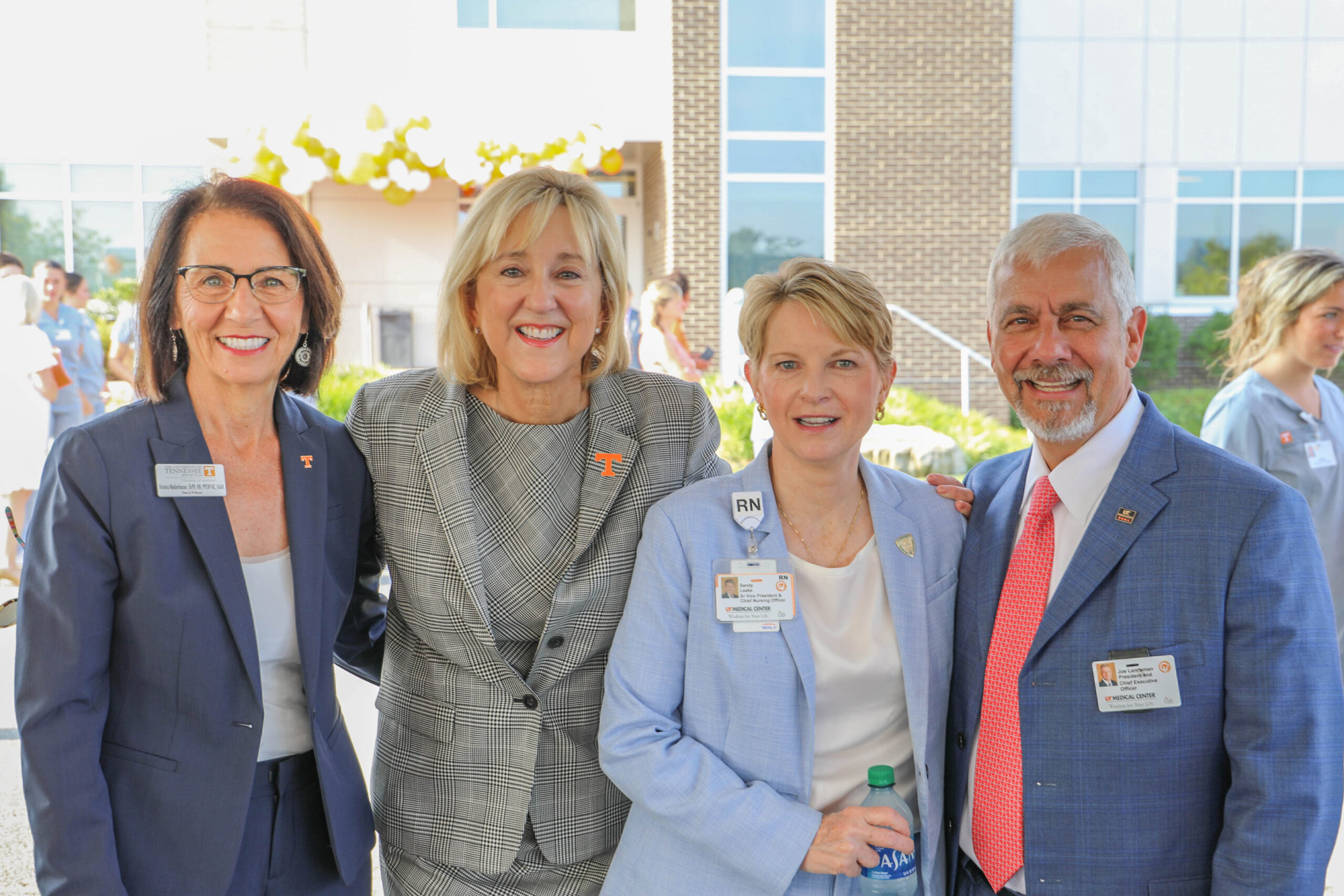
The University of Tennessee Medical Center and University of Tennessee, Knoxville, College of Nursing celebrated the opening of the BSN Scholars Facility with a special ribbon-cutting ceremony on Friday, Aug. 25.

The new state-of-the-art simulation and learning lab were funded by the medical center for the BSN Scholars partnership, a groundbreaking academic-practice partnership that provides nursing students with an unparalleled opportunity to learn at a respected academic medical center. The newly established satellite location at UT Research Park symbolizes the commitment of both institutions to advancing nursing education, preparing future nursing professionals for the challenges of the field, and meeting regional workforce needs.

“This innovative program will allow more students to pursue the health care career they want—changing not only their lives but the lives of patients they care for and the communities they serve,” said Chancellor Donde Plowman, “It’s a testament to what’s possible when you have a partner like UTMC that shares our vision and mission of making life and lives better for Tennesseans.”

Victoria Niederhauser, College of Nursing dean, spoke at the event, telling the crowd how the partnership was formed.

“We knew that the old tactics were not going to solve today’s nursing workforce issue, so together we built a new approach to increase the recruitment pool — the BSN Nurse Scholars Program,” she said. “This program not only accelerates academic learning but also bridges the transition from classroom education to the clinical setting. I commend the commitment of UTMC for providing financial support and enabling nursing students to gain valuable experience at the very institution they will eventually serve.”

Also speaking at the ceremony were Joe Landsman, CEO of UTMC and Sandy Leake, senior vice president and chief nursing officer at UTMC.

As attendees looked on, representatives of both institutions came together for the ribbon cutting that symbolically inaugurated the new facility. The gesture underscored the unity of purpose driving the endeavor and marked the beginning of an exciting new chapter in nursing education.

Following the ceremony, attendees were invited into the facility for tours and refreshments.

CONTACT:

Kara Clark (865-974 9498, [email protected])

College of Nursing Faculty Part of $3.5 Million Research Grant

College of Nursing faculty member Joel G. Anderson and colleagues have been granted a research award totaling over $3.5 million from the National Institute on Aging. The grant is a testament to the team’s groundbreaking work and commitment to advancing research in the field of caregiving for people living with dementia.

Anderson, an associate professor known for his exceptional contributions to caregiver support in dementia care, has demonstrated a profound dedication to advancing knowledge in his field. This recent grant award recognizes his leadership and expertise in the pursuit of meaningful research that addresses critical challenges faced by society.

The project, titled “Enhancing Measurement and Characterization of Roles and Experiences of Sexual and Gender Minority Caregivers of Persons living with Alzheimer’s Disease and Related Dementias,” is set to span a five-year period. In collaboration with co-principal investigators Jason Flatt from the University of Nevada-Las Vegas and Maritza Dowling from George Washington University, Anderson and his team will embark on a comprehensive study to understand the experiences, roles, and dynamics of LGBTQIA+ caregivers of people living with dementia.

“We still don’t know a lot about the experiences of LGBTQIA+ caregivers of people living with dementia, so existing measures are unlikely to be sensitive to their unique needs and experiences,” said Anderson. “Some of the critical gaps we aim to address with this study are how current definitions of families can be broadened to better reflect changes to family structures, how different relationship types affect caregiving dynamics, how caregiving and gender roles affect the type of care provided, and how discrimination may represent a barrier for LGBTQIA+ caregivers toward seeking the help and support the need.”

The project aims to identify existing domains and develop new measures that accurately capture caregiving constructs and experiences of LGBTQIA+ caregivers. By testing and validating, the team will ensure these measures are inclusive and effective in portraying the unique challenges and experiences faced by LGBTQIA+ caregivers in the context of dementia care.

Individuals who identify as lesbian, gay, bisexual, transgender, queer, intersex, asexual, and/or other identities remain underrepresented in dementia caregiving research. Estimates suggest that nearly 1 million LGBTQIA+ adults in the U.S. are caregivers, with nearly half providing care to someone living with dementia. Previous research conducted by the team highlighted health disparities experienced by LGBTQIA+ caregivers, such as caregiver stigma, depressive symptoms, and discrimination, necessitating an inclusive approach to caregiving research. The proposed study, guided by a community-based participatory approach, will leverage the expertise of advisory boards and caregiving experts to identify and explore domains of caregiving for LGBTQIA+ caregivers, develop and refine new measures, and test these measures among a diverse sample of caregivers.

Research reported in this press release was supported by the National Institute on Aging of the National Institutes of Health under award number 1R01AG083177-01. The content is solely the responsibility of the authors and does not necessarily represent the official views of the National Institutes of Health.

___

CONTACT:

Kara Clark (865-9749498, [email protected])

Newnam Selected as Fellow of the American Academy of Nursing

Associate Professor of Nursing Kathy Newnam has been named an American Academy of Nursing Fellow.

Fellows represent nursing’s positive impact through representation in a variety of roles and settings from governmental positions to executive and entrepreneurial leadership in practice, nonprofits, and higher education. Through a rigorous and competitive process, the academy’s Fellow Selection Committee, which is composed of elected and appointed fellows, reviewed nearly 400 applications.

Induction into the academy is a significant milestone in which past and current accomplishments are honored by colleagues within and outside the profession. 

“I am incredibly honored to have been named as a Fellow in the Academy of Nursing,” said Newnam. “This accomplishment is the result of unwavering mentorship, teamwork, and nursing leadership that has paved the way to achieve both personal and professional goals.  As a nurse scientist and neonatal nurse practitioner, it has been a gift to work with the smallest humans and their families as I strive to improve neurodevelopmental outcomes through my multidisciplinary program of clinical research. The Academy of Nursing supports all areas of nursing excellence to improve global health, improving healthcare for all. I am so proud to contribute to this worthy mission.”

Newnam’s current research addresses parental engagement through purposeful language to reduce biophysical markers of stress and support cognitive development in medically fragile high-risk infants.

She leads interdisciplinary studies, funded by the National Institutes of Health and other sources, that examine predictors of neonatal risk and resilience through longitudinal exploration of communication patterns and language trajectories over the first 36 months of life. Her clinical expertise, informed by experimental research, has supported practice changes in neonatal respiratory management and human milk promotion.

“Dr. Newnam’s selection as an American Academy of Nursing Fellow is a testament to her exceptional contributions in advancing the health of infants and their families and her unwavering dedication to the nursing profession,” said Dean Victoria Niederhauser. “Induction into the academy is a remarkable milestone that recognizes the remarkable achievements of individuals like Dr. Newnam, who have made a positive impact through their roles in various settings and leadership positions. We congratulate Dr. Newnam on this well-deserved recognition and look forward to her continued contributions to the field of nursing and the betterment of health care outcomes for children and families.”

Newnam’s collaboration with NEC-Zero and the University of Arizona NeoECHO team supports evidence-based interventions to improve timely recognition and reduce the incidence of necrotizing enterocolitis. The impact of her research is far-reaching, with published findings in journals of nursing, speech therapy, psychology, and early childhood development. She holds section editor and editorial board positions for Advances in Neonatal Care.

Newnam received her BSN and MSN from Old Dominion University, her post-master’s certification as a neonatal nurse practitioner from East Carolina University, and her PhD from Virginia Commonwealth University.

Newnam will be officially inducted on October 7 during the academy’s Health Policy Conference in Washington, DC.

___

CONTACT:

Kara Clark (865-9749498, [email protected])

Barry Selected as Young Tennessee Nurse Leader

Laura Barry, clinical instructor at the college, was recently selected as a Tennessee Action Coalition, Nurse Leader Rising Star.

This is an elite group of young Tennessee nurse leaders representing the three grand divisions of Tennessee, a variety of racial and ethnic backgrounds, frontline clinicians, academicians, and managers. 

“When I was in nursing school, an inspiring instructor told me that nurses can change the face of healthcare if we work together,” said Barry. “She motivated me to fight for the advancement of the profession and to understand that the true impact of nursing is not only affecting individual patients, but also the entire healthcare system. This passion continues to fuel my practice in teaching, bedside practice, and professional service. I never want to forget that nurses are an incredible force within healthcare whenever we raise our voices collectively.

The aim of the Tennessee Rising Star Nurse Leader program is to engage and empower young nurses to lead the profession in improving the health of Tennesseans.

Selection was based on criteria determined by leaders from the Tennessee Action Coalition, Tennessee Nurses Association, and Tennessee Hospital Association; and includes leadership among peers and others, professional growth and development, contribution to building a culture of health in the community, and commitment as a role model for health.

“We are immensely proud of Laura Barry for her outstanding achievement as a Tennessee Action Coalition, Nurse Leader Rising Star,” said Victoria Niederhauser, dean of the college. “Her selection among this esteemed group of young nurse leaders is a testament to her dedication, passion, and commitment to the nursing profession. Laura’s exemplary work as a clinical instructor, her active involvement in professional organizations, and her continued pursuit of advanced education demonstrate her drive to make a positive impact on healthcare.”

Barry received her BSN from the University of Tennessee, Chattanooga, and her MSN in nursing education from Tennessee Tech University. She is currently pursuing a PhD in Adult Learning at the University of Tennessee, Knoxville. Additionally, she is a certified emergency nurse and a trauma-certified registered nurse.

She continues to practice within a staff nurse role at a level one trauma center. Barry is the membership ambassador for the Gamma Chi Chapter of Sigma Theta Tau, the secretary of District Two of the Tennessee Nursing Association, and a member of the Emergency Nursing Association.  

CONTACT: Kara Clark Cardwell ([email protected], 865-974-9498)

From Cells to Society

The best career advice Joel Anderson, associate professor at the University of Tennessee, College of Nursing ever received was to do what makes your feet dance.

Anderson’s career started at the lab bench in a cancer research lab. His work focused on testing new chemotherapy agents for brain tumors.

“During that time, my grandmother was the primary caregiver for my great-grandmother who was living with dementia,” said Anderson. “I watched as she and my mother worked to provide care for my great-grandmother, putting their own health care needs and well-being aside.”

Following the death of his great-grandmother he realized the impact caregiving had on his family. This is what inspired Anderson’s work with families caring for someone living with dementia.

“Now I do community-focused research,” said Anderson. “Going from cells to society was only possible because I was willing to take the leap and follow my passions. I have been fortunate to have mentors along the way to support and encourage me, but it started with making the decision to dance.”

In the U.S., nearly 42 million people are providing billions of hours of unpaid care for an older adult. This number has increased dramatically over the past five years, with more caregivers reporting a negative impact on their finances and own health and many younger adults taking on caregiving roles.

“My research is about supporting families living with Alzheimer’s disease and dementia,” said Anderson. “I want to understand what it means to be a family caregiver so that I can work to develop family-centered strategies to reduce caregiver strain and improve quality of life for the caregiver and their family member with dementia.”

Anderson has several ongoing projects that support his research. RISE (Research Inclusion Supports Equity) is a project funded by the National Institute on Aging that launched in 2022. It is the first national collaborative effort to ensure engagement and inclusion of LGBTQIA+ people living with memory loss and LGBTQIA+ caregivers of people with memory loss in research. The project includes a national network of LGBTQIA+ community members, service providers, clinicians, and researchers from Emory University, the University of Nevada-Las Vegas, the University of Wisconsin-Madison, George Washington University, the University of Kansas, and Columbia University.

Another ongoing project funded by the National Institute on Aging is called Robotic Caregiver to Comprehend, Assist, Relieve, and Evaluate for Persons with Alzheimer’s Disease (Robotic CARE for AD). The CARE project is a collaboration with faculty in the Tickle College of Engineering to develop potential support for caregivers and people living with dementia using social robots and artificial intelligence.

Anderson is also a part of a project in the United Kingdom funded by the British Academy to harness social media to support people living with dementia.

“We’re developing a framework to guide training and resource development for this population,” said Anderson. “The project includes collaborators from Bournemouth University, the University of Liverpool, and the University of Birmingham.”

In one of Anderson’s first studies, he recalls interviewing a caregiver who was looking for information to aid them in taking care of their family member. This caregiver could never find the right answers.

“That stuck with me because I had the information, they were looking for at my fingertips by virtue of being a researcher,” said Anderson. “I gave them the information and they were overjoyed, reporting back to me later how that had made such a difference. It cemented in my mind the reminder that I’m doing what I’m doing to help families. And if I’m not getting the findings from my research, or research in general, into the hands of those who need it, I’m not doing my job well.”

Anderson continues to dance in his research and is honored for his contributions to society. He was recently awarded the LGBTQ Advocate Award at UT.

“My goal is to improve the quality of life for families living with Alzheimer’s disease and dementia,” said Anderson. “If my work in any way makes that possible then I have succeeded.”

CONTACT:

Kara Clark Cardwell (865-974-9498, [email protected])

College Receives HRSA & NIH Grants

Associate Professor Lisa C. Lindley has received a four-year award of $1.5 million from the National Institutes of Health National Institute of Nursing Research for her project “Effectiveness of Concurrent Care to Improve Pediatric and Family Outcomes at End of Life.” The study will investigate the impact of concurrent hospice care compared to standard hospice care in improving continuity and quality of pediatric end of life. Lindley will be working with an interdisciplinary team of pediatric end-of-life scholars from nursing, medicine, and health care economics to conduct the first-ever concurrent care study with children and adolescents in hospice care, using nationally represented Medicaid data from 2011 and 2013. The study will compare the effectiveness, potential burdens, and cost of concurrent care compared to standard hospice care for children and adolescents. The findings will expand our understanding of pediatric concurrent care and will inform clinicians and families of the value of this intervention for children and adolescents. This line of investigation is ultimately expected to improve care and outcomes for children, adolescents, and their families at end of life.

Sandy MixerAssociate Professor Sandra Mixer has received a four-year award of $2.6 million from the US Health Resources and Services Administration for her project “Transforming RN Roles in Community-Based Integrated Primary Care through Academic Practice Partnership.” The project supports the expansion of the academic practice partnership between the College of Nursing and Cherokee Health Systems (CHS), a nonprofit organization that provides primary care, behavioral health, and addiction services to more than 70,000 people throughout Tennessee. BSN students will be recruited and trained to provide integrated services to culturally diverse rural and underserved populations at four CHS sites in East Tennessee. The program includes both an innovative undergraduate nursing curriculum change and advancement of the RN workforce through professional development in primary and preventive care. It will provide the region’s first comprehensive community-based integrated primary care (CBIPC) training for students and RNs, with a focus on primary care, population health, and interprofessional education and practice and an emphasis on chronic disease prevention and control, recovery-based mental health and substance use, and childhood obesity. Faculty and clinical partnership liaisons and clinical coaches will serve as role models, preceptors, and mentors to students through more than 300 hours of clinical experiences in CBIPC teams over two years. Nursing workforce projections for the next decade forecast an unprecedented need for nurses to expand their roles in preventive, primary, and chronic care, and CBIPC training will uniquely qualify our BSN graduates to meet those challenges.

Faculty Spotlight: Kim Powell

Kim Powell joined the college in August as an assistant professor. She received her PhD along with a graduate certificate in health policy from the University of Tennessee, Knoxville, an MSN from Spalding University and a BSN from Purdue University.

Powell’s research interests are in the areas of health information technology and self-management of patients with multiple chronic conditions. As part of her dissertation research, Powell conducted a multiple methods study and formed partnerships with UT’s Haslam College of Business and private-sector organizations in order to investigate the use of electronic patient portals.

In January 2018, Powell was awarded a post-doctoral appointment with the University of Missouri Sinclair School of Nursing.  As part of her post-doctoral appointment she will work on a grant funded by the Agency for Healthcare Research and Quality (AHRQ) to examine information technology adoption in nursing homes and the impact of technology on quality measures.

The ultimate goal of Powell’s research is to use technological tools such as the electronic patient portal to improve outcomes. “In order to make a significant impact on patient outcomes and to improve delivery of health care services in our country, we must think differently about how we engage patients and empower them to be partners in their care,” said Powell.

As a nurse researcher, Powell is passionate about leading change through improved partnerships between patients and providers as well as partnerships between researchers and health care organizations. During her doctoral studies, she was able to partner with the nation’s largest provider of post-acute care and another large primary care organization in mutually beneficial ways. They supported her in her research and she helped them by giving them insight into their processes and potential areas for improvement.

Recent Faculty Accolades

Samereh Abdoli was accepted for participation in the Early Career Reviewer program at the Center for Scientific Review, National Institutes of Health.

Laurie Acred-Natelson was the recipient of the Tennessee Organization of Nurse Executives (TONE) Excellence in Nursing Leadership Award during the 2016 Tennessee Hospital Association Annual meeting in Nashville.

Joel G. Anderson received a visiting international academic fellowship from the University of Exeter in the United Kingdom to support his ongoing collaboration with researchers in there in the Centre for Research in Ageing and Cognitive Health.

Joel G. Anderson, Xueping Li, and Karen Rose received funding from the Kavli Foundation to support phase I development of an app aimed at supporting of patients with dementia and their family caregivers.

Lora Beebe has been named to the American Academy of Nursing’s 2017 Class of New Fellows.

Edelyn Bishop accepted the role of faculty advisor for the Ambassadors for Mental Health Awareness and Suicide Prevention program.

Julie Bonom received the 2017 Recent Alumna Award from UT Health Science Center.

Sharon Davis received the Maureen Nalle Leadership Award on behalf of the Tennessee Nurses Association, District 2.

Terri Durbin was selected as one of the inaugural Experience Learning faculty fellows at UT.

Susan Fancher earned her MS in medical simulation from Drexel University School of Medicine.

Sally Helton received the 2017 Visionary Voice Award from the National Sexual Violence Resource Center for her work to end sexual violence.

Mary Jane Johnson received the Service Award for her significant time, effort, and service to the Tennessee Nurses Association District 2.

Rebecca Koszalinski was awarded the Tennessee Nurses Association District 2 Scholarship Award for her significant contribution to the advancement of nursing.

Lisa Lindley was promoted to associate professor and was selected to co-chair the Measuring What Matters—Electronic Clinical Quality Measures Committee and the Quality Improvement Scientific Subcommittee for the Hospice and Palliative Nurses Association. She was also selected to attend the Cornell University­–National Data Archive on Child Abuse and Neglect Summer Research Institute.

Jeremy Mills was elected president of the Tennessee chapter of the American Psychiatric Nurses Association.

Sandy Mixer was selected by the May graduating class to receive the Outstanding Clinical Faculty Award.

Carole Myers was on sabbatical from January through July. During that time she was appointed a senior fellow of the Center for Health Policy and Media Engagement at George Washington University College of Nursing. She was also one of four faculty members selected nationally to participate in the American Association of Colleges of Nursing Faculty Policy Intensive. She launched a twice-monthly radio spot called HealthConnections on WUOT, UT’s National Public Radio affiliate, airing during Morning Edition and All Things Considered. She was also appointed to the Tennessee General Assembly Scope of Practice Task Force and elected to serve as co-chair. She attended the American Nurses Association Membership Assembly as the elected representative for the Tennessee Nurses Association. Myers is the continuing chair of the Finance Committee of the Sertoma Center and serves on the national Nurses on Boards Coalition State Strategy and Implementation Advisory Committee.

Karen Rose was honored as a visiting professor by Shandong University College of Nursing in Shandong, China, in June as she was there lecturing their undergraduate and graduate students in gerontological nursing.

Rachel Ross received the Social Worker of the Year award from the Tennessee chapter of the National Association of Social Workers for her work in integrated health care with the interprofessional team at the Vine School Health Center.

Shelia Swift was honored with the Regional Cooperative for Professional Nurses Week Clinical Excellence Award.

Sheila Taylor was awarded the Tennessee Nurses Association District 2 Clinical Award for outstanding clinical skills and significant contributions to nursing practice.