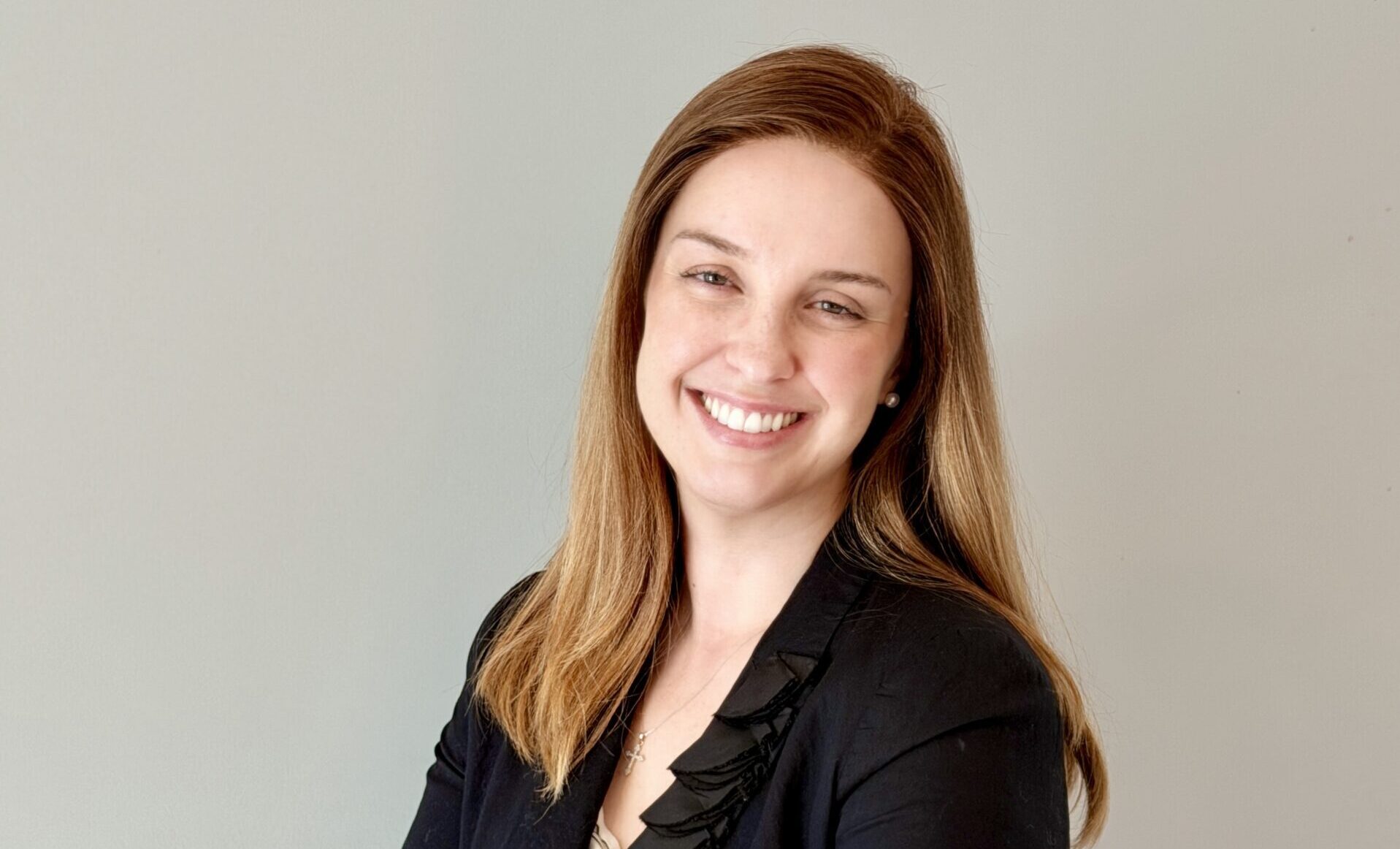
For more than a decade, Stephanie Fancher worked in acute care pediatrics, often on the front lines of children’s health. In 2019, while working in a children’s emergency department, she noticed a troubling trend. More children were arriving with illnesses that vaccines could have prevented.
“That realization unsettled me, and it lingered,” Fancher shared.
One encounter left a lasting mark. A young boy came in with a badly lacerated leg, and when his provider recommended a tetanus shot, his mother was hesitant.
“She was willing to hear us out,” said Fancher. “We fielded her questions such as, “What is tetanus?” “What ingredients are in the vaccine?” “What side effects could she expect?”, all while trying to preserve her trust and advocate for her child’s health.”
The boy ultimately left the ER with his first tetanus vaccine.
“That moment stayed with me,” she recalls. “We were proud, but I kept thinking about how hard it was to find simple, clear, jargon-free, and respectful resources for families. Nursing and medicine shouldn’t be this hard.”
Encouraged by a friend and later inspired by a conversation with a mentor, Fancher realized the best path forward would be pursuing a PhD in nursing.
Research with Purpose
From the start, her research has centered on child advocacy, preventive care, access barriers, health policy, and vaccines.
Children and their well-being have always been at the center of Fancher’s heart.
“Children deserve every opportunity for a healthy future, unscarred by illnesses we know how to prevent,” she says. “Vaccines are one of the most powerful tools we have to protect them.”
For Fancher, the research is more than an academic exercise. It’s a pathway for nurses to turn hard questions that they face into solutions, practice and policy.
“I realize that if we don’t step into this space as nurses, others will, and I think health care is beginning to see that,” shared Fancher. “Nurses are closest to patients and families. We understand their struggles. So, who better to generate the evidence and speak life into policies that affect them? My research encompasses the perspectives of nurses, schools, and the community—voices that are often missing in policy rooms and decision-making processes.”
Fancher also emphasizes that the skills gained from the PhD program, such as problem framing and critical thinking, are not just for research but for life.
“What I’ve learned has empowered me to advocate more effectively,” she said. “Whether a patient is in a health crisis or for a system-level change. Research is a different form of advocacy and it’s another path to care for families. If I can use my PhD to offer a louder voice, or a better life for someone, every obstacle, every late night, every setback will have been worth it. Nurses strengthen the profession’s voice and nursing research redefines what’s possible for patients and for health care.”
Resilience Through Challenge
Fancher’s PhD journey has been anything but ordinary. After her first year in the program, she found out she was pregnant and a few short months later faced a brain cancer diagnosis.
“The encouragement of Tami Wyatt, associate dean of research has been the most rewarding parts of this journey,” Fancher said. “PhD education isn’t about memorization. It’s about learning to think differently, ask better questions, to push and pull, and to embrace discovery. Having professors who believed in me, even during life’s hardest seasons, kept me going.”
She also found strength through the stories of others, including former PhD students and even strangers like Dr. Christina Costa, whose TED talk on gratitude reshaped her perspective on challenges.
Costa was diagnosed with the same type of cancer as Fancher during her PhD program.
“Gratitude changes your brain chemistry,” she explains. “It gives you the courage to stand up, take the next best step, and keep moving.”
Throughout the process, Fancher has learned just how resilient she is.
“This program has witnessed me get knocked down and then slowly and steadily get back up again and again,” she added.
Lessons in Self-Advocacy
Her research training has not only shaped her scholarship but also empowered her personal health journey.
“When you choose to fight, you don’t cherry-pick,” said Fancher. “You clear the path because you cannot walk with hope and faith without a footing.”
When her insurance initially denied coverage for a cancer treatment device, she drew on her skills as a researcher and advocate to appeal the decision and won.
“My PhD training taught me to view problems through multiple lenses, pause before forming opinions, and seek evidence before acting,” she says. “That approach helped me advocate for myself with confidence.”
Looking Ahead
Fancher hopes to use her PhD to influence public health policy in Tennessee, bringing the voices of nurses, caregivers, patients, and survivors to the table.
“My greatest hope is to use this degree to advocate for Tennesseans’ public health,” she added. “I hope to be a voice in policy conversations, to testify not only as a researcher but as a nurse, a caregiver, a patient, and— importantly—a survivor.”
Her message to fellow students facing challenges is simple:
“Keep knocking on doors. Don’t let a professor, a provider, or even your own doubts stop you. Your past or current situation does not define your future—you get to write that story.”
Today, Fancher’s cancer is undetectable and she is working towards finishing her dissertation.
—
CONTACT:
Kara Clark Cardwell ([email protected], 865-974-9498)